Introduced varieties
Picholine
 Origin
Provence (France).
Origin
Provence (France).
Agro biological properties
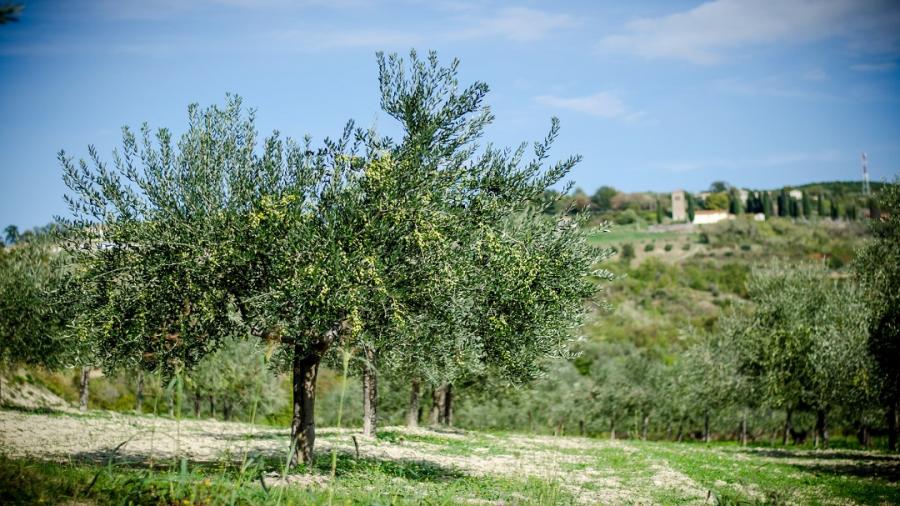
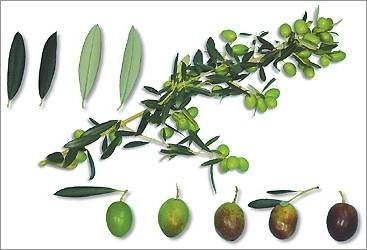
Moderate vigour, with dense and expansive foliage. Fruit bearing branches are slightly hanging and have long internodes. Leaves are big, elliptical, flat and tapered, with a light green colour. Olives are medium in size (3 - 5g), oval, elongated and asymmetrical, becoming wine-red in early maturation, black at full ripeness. The green drupes are often preserved. Adaptable to the many soil types.
Fruit bearing
Good, regular, medium-late (September-December). Young plants bear fruit early.
Fertilization
Partially heterogamous fertilization (bearing two different types of flowers). Recommended fertilizers: Leccino and Manzanilla.
Resistance to adversities
Good resistance to drought and peacock (or eye) spot (spilocea oleagina), moderate resistance to lower temperatures. Susceptible to olive fly (bactrocea oleae).
Quality of the oil
While the oil yield is average, the quality is excellent for combined use. Produces outstanding dark green oil with a harmonious, mouth filling spice and bitterness and accents of mature olives after the first decanting. In preserved olives, the pulp is separated from the pit.